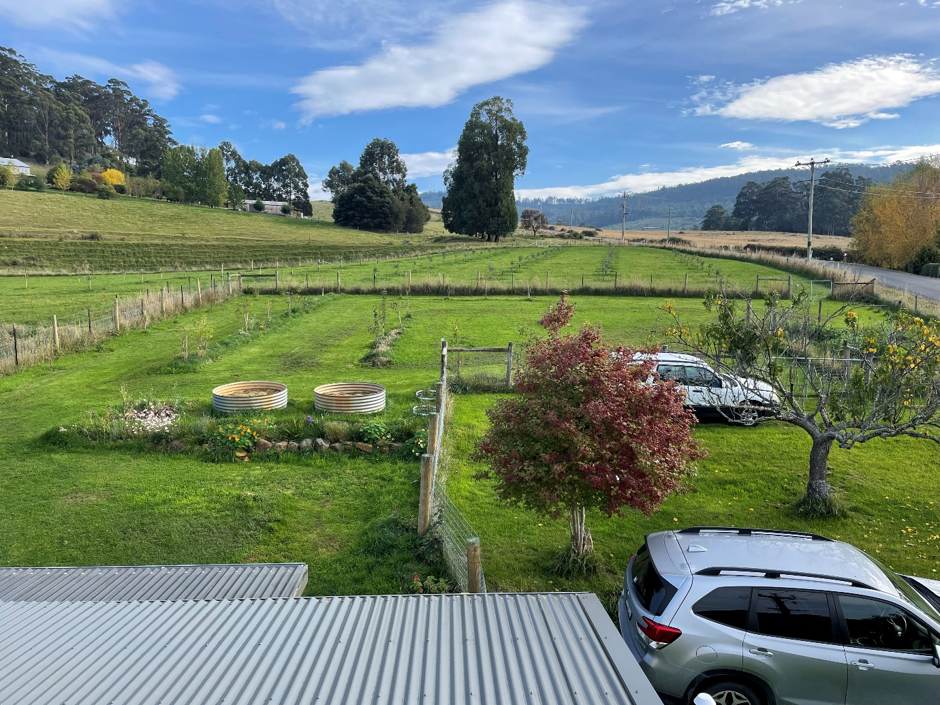
My little patch of eight-acres is slowly turning from barren fields into a food and fibre powerhouse. This has me questioning, can Franklin Grange be both lucrative and sustainable? I believe so.
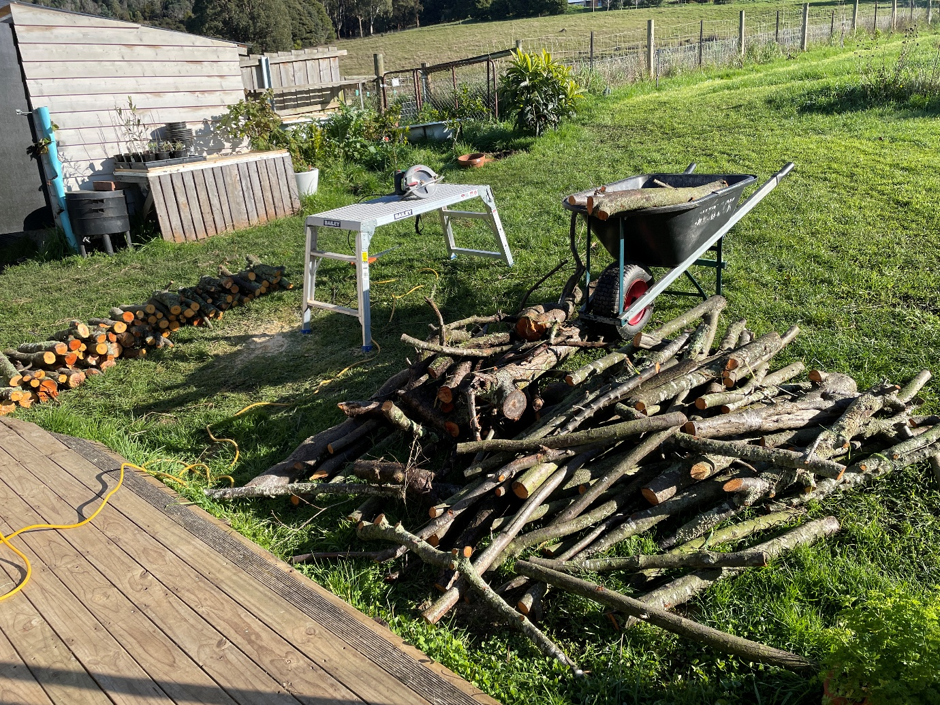
Nothing leaves the site without the question being asked, “can it be repurposed, recycled, or reused?
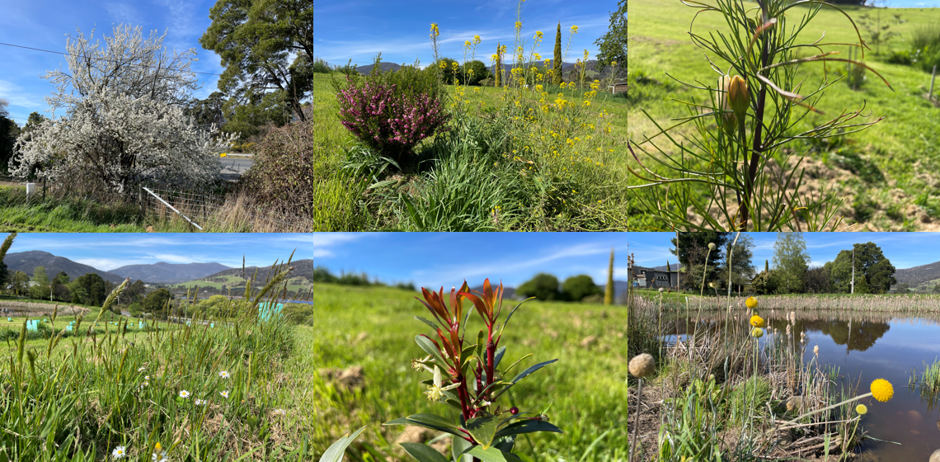
Habitat has been planted, awaiting future inhabitants, while providing food for my ever-hungry bees, local insects and visiting birds.
Olive trees are in place to provide future income and a ‘Zone 1’ (permaculture) vegetable garden is taking place.
While only a little over two-years has passed on the property, the enormity of the task, and what needs to be done, drives me to keep planting and planning more.
With that said, there is plenty of upside to plant more for future growth and prosperity.
Guilds, Permaculture, Mulch, Worm Farms
There is no substitute for growing your own fresh, nutritious food. This has been the priority throughout winter and will continue through the spring/summer period.
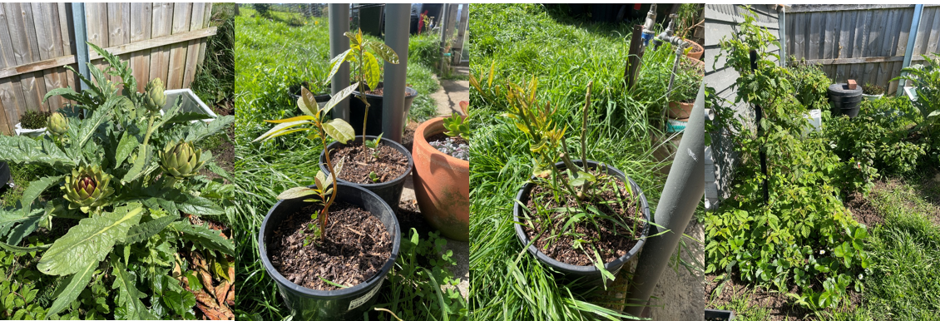
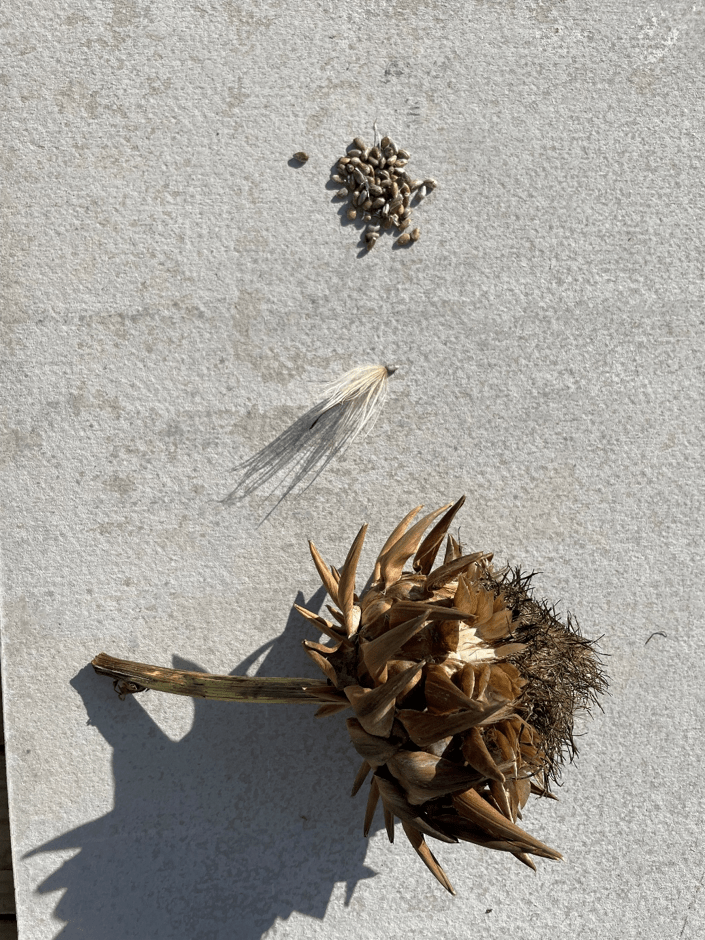
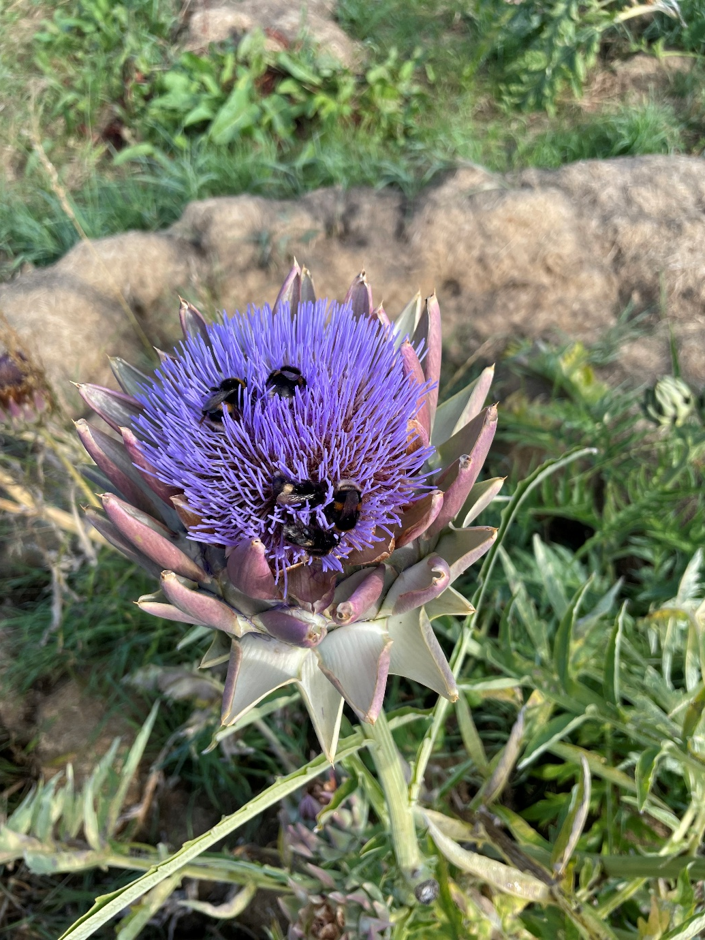
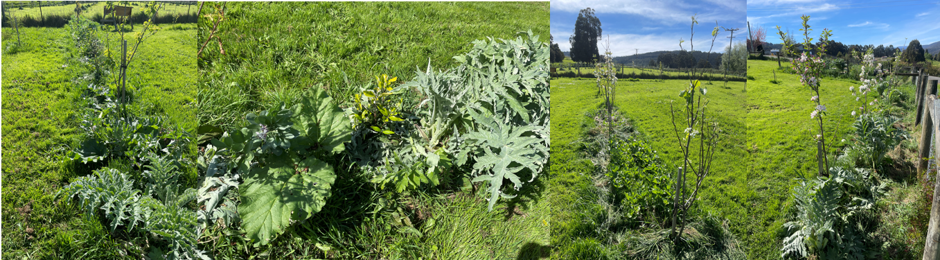
From left to right (above): the artichokes growl at me continuously, but say hello as well. Two avocado plants have been grown from seed, the trick? “Worm castings!” Rescued lemon tree loving life and the out-of-control raspberries, for which I am not complaining about!
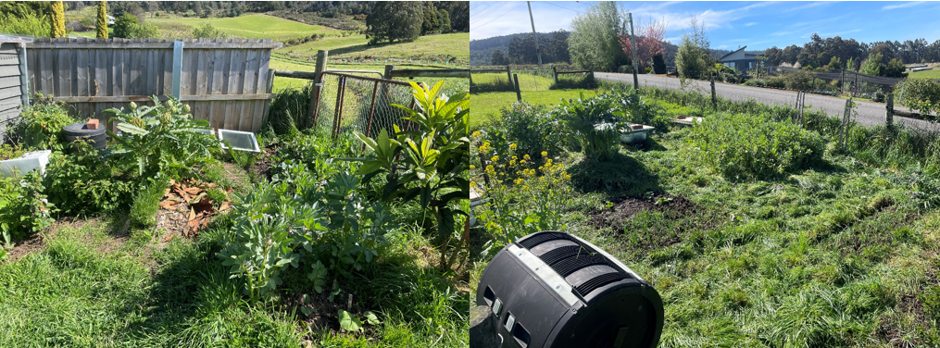
Above are my two primary growing areas as well as mulching and recycling. The one on the left provides food close to the house (Zone 1 in permaculture); on the right, mulching, green manure and worm farms. I have some garlic in here, but that is more for organic pest management in the future.
Windbreak
With an exposed farm, wind is that omnipresent 5-year-old asking a barrage of relentless questions that eventually wears you down. With that said, wind can be friend, and foe; redirection is key!
Images below highlight a story of a ‘Poplar’ tree hedge recently planting to offset and redistribute the wind and use it in my favour. As they say in Permaculture: “The problem is the solution!”
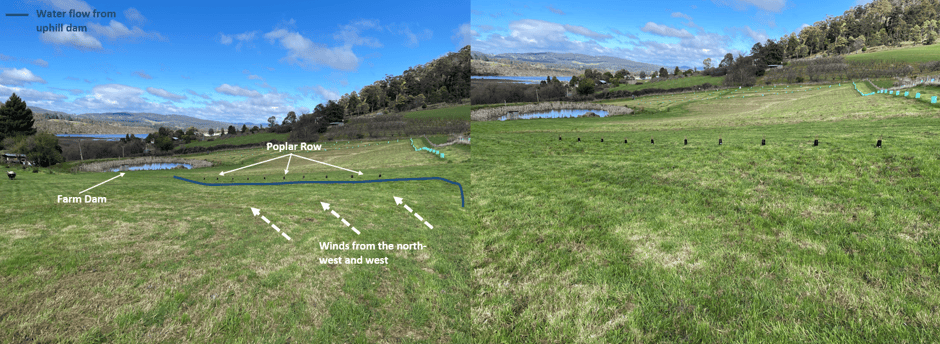
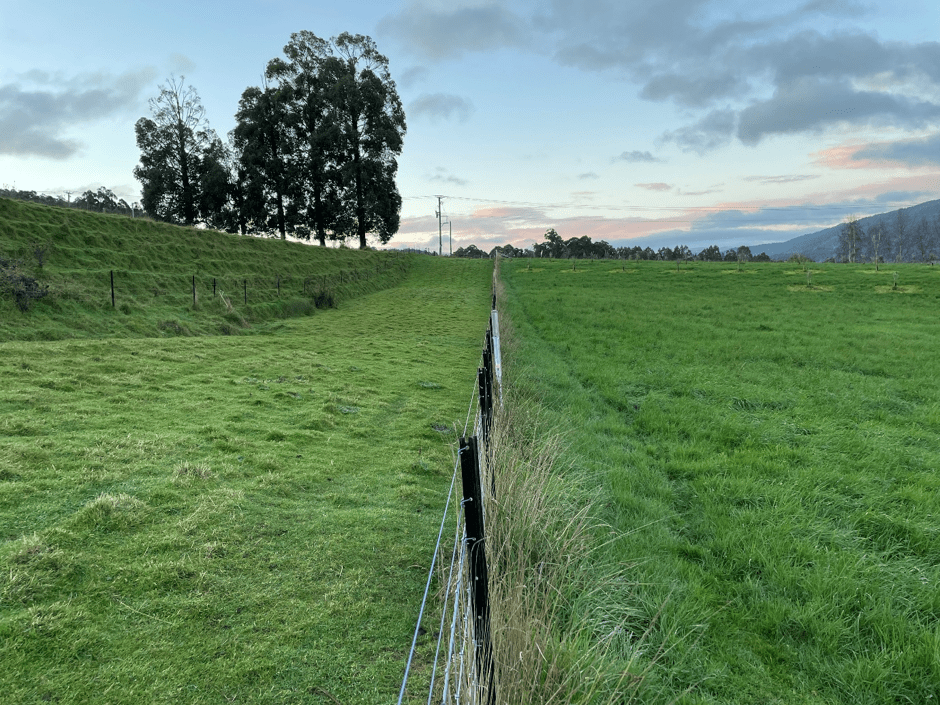
Parallel to this Poplar row sits soggy ground, courtesy of an uphill dam with a slight leak. While this has advantages (I plan to plant elderberry hedges), a drying and redistribution effort is required. The windbreak (once mature) allows the wind to recirculate in this position, cutting through the trees and over the top of them. This disrupts the wind, redistributes force, and has a drying effect where needed. Plus, it offers more protection for the farm dam.
Poplar trees are deciduous, allowing that winter sunshine to stream through, and providing summer shade to the paddocks. This will be advantageous when I plant another 200-olive-trees next year.
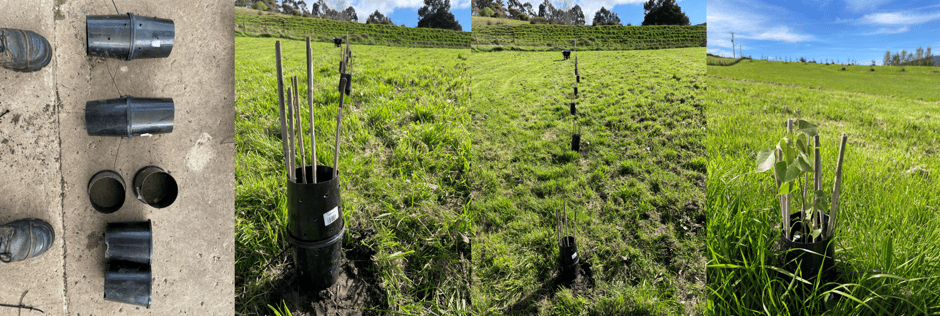
‘Reuse-recycle-repurpose’, classic Circular Economy philosophy. Here, 140cm plant pots and left over bamboo stakes are used to protect these young ‘Poplar’ tree (Populus) from Bugs Bunny and his mates, who are more than a little rambunctious at this time of year. The right image shows leaves, long grass and strong growth, and in a few years, this will come in to effect as a solid windbreak.
To improve the windbreak, provide habitat, and foraging opportunities for birds and insects, I will plant varying colours of Callistemon natives (Australian Bottlebrush). Plus, a load of varying berry plants which will love full sun and soggy environment.
Catching Bee Swarms
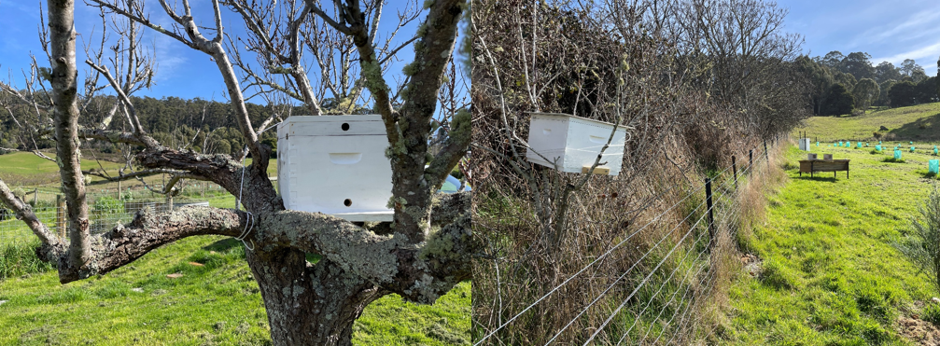
I’m on a mission this spring to catch swarms around my property and within my local area. Since the last post, I have moved two of the bait hives to elevated areas, close to flowering fruit trees, with the goal of enticing some curious scout bees for a routine inspection, with the hope that they will tell their mate about the new digs on offer.
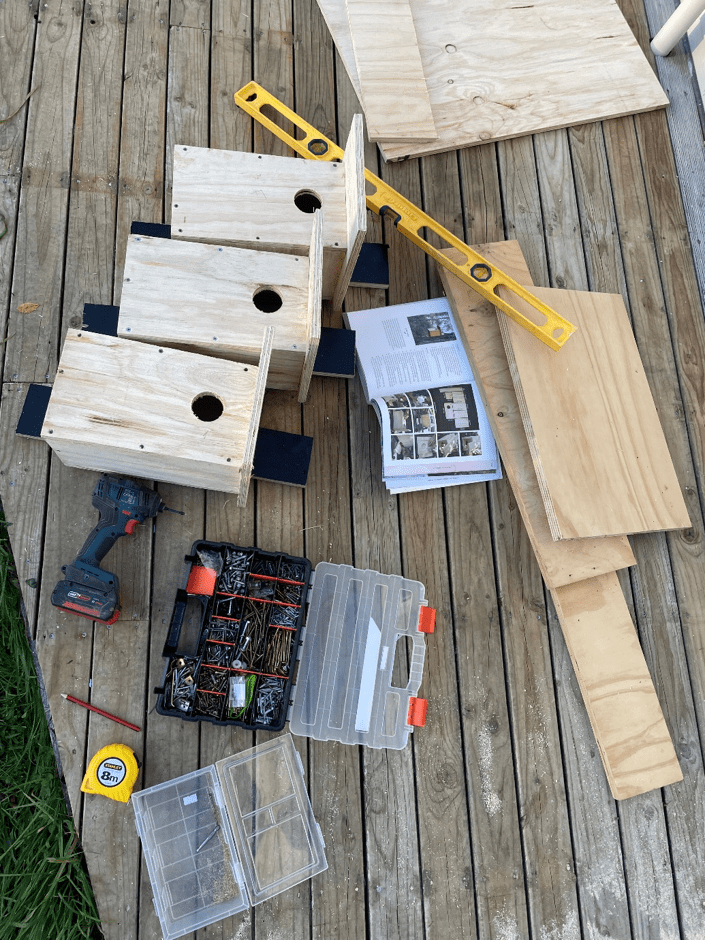
Being hopeful, most likely a little too optimistic, I built another Kenyen Top Bar hive to complement the other. This version uses locally sourced Australian Blackwood (Acacia melanoxylon), with the sidewalls 30mm thick to provide greater insulation the bees require to survive those long winters.
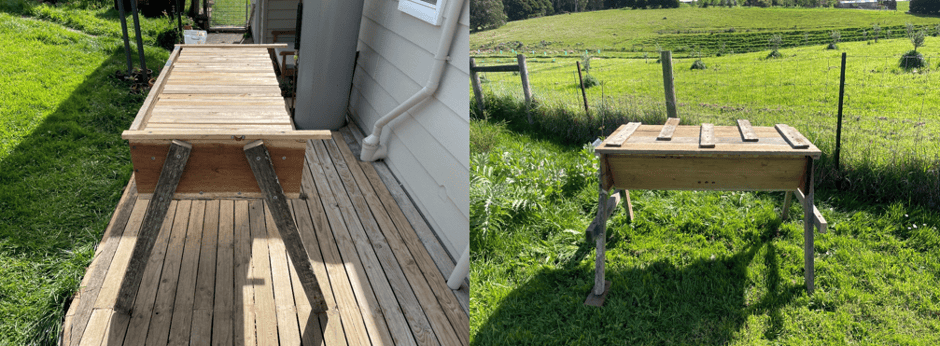
The plan for these beehives is simple: provide us with honey to see us through a season, plant more flower trees and natives to attract more swarms, catch more swarms from the farm and surrounds, and gradually turn this into an income stream for the farm.
Spring has sprung…
After what seems an eternity of frigid cold days and fish-slapping wind, spring has graced our patch of dirt, halleluiah! Fruit, nut, and native trees are starting to say hello, as they awaken from their slumber. Once flowers appear, they are popular and inundated with friends (native bees, spiders, lady bugs), friends-of-friends (honey bees, bumble bees); not so friendly (pesky birds eating branches, aphids).
To date, I have planted more than 600-trees (olive, native, fruit, nut) in order to provide habitat, economic benefit, and to feed ourselves.
The Nursery
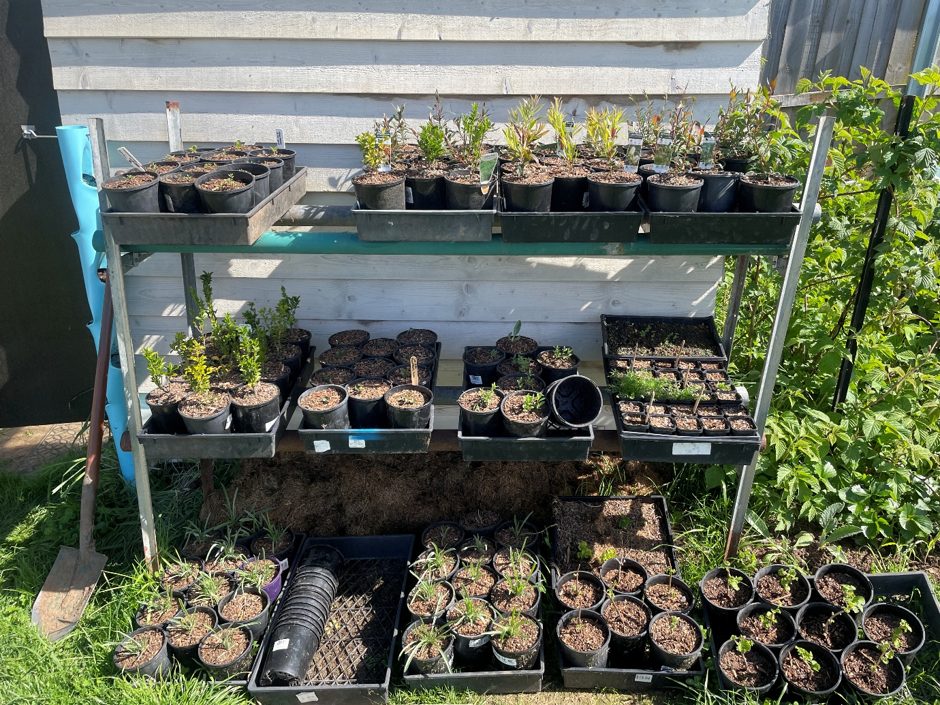
Having a dedicated area to propagate and grow perennial and annual plants is a time and water saver. This tiered system allows for maximum watering at the top, which trickles down though the three-levels. Eventually, I will plant leafy greens on the bottom to truly maximise the water used. Thinking along these lines, this becomes a four-for-one deal: I water once from the top and this saves me minutes a day. Time is an important commodity, not just in life, but also, on the farm.
Evolution of the Swale System
During the wintery rain season, the decision to catch run-off became necessary. Armed with gumboots, a shovel, and coffee, I dug a series of swales, tracking the overflow from my neighbour’s dam, and containing the water. This will slowly leach into the areas that need it.
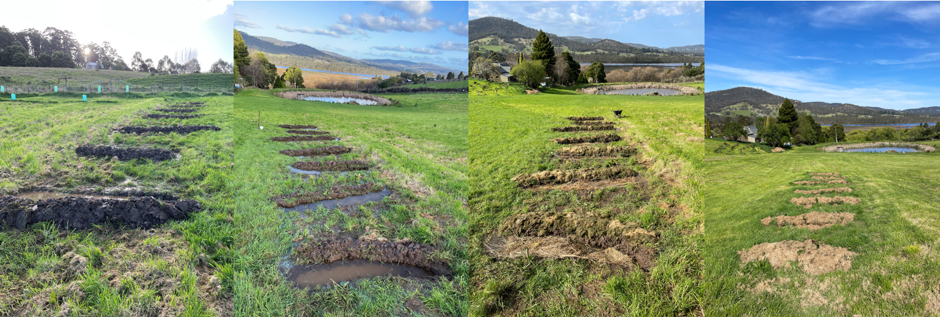
Initially, this was a scar on the landscape, but given time, it evolved to become a habitat for frogs, insects, and birds. The image on the left-hand side is the initial dig, with organic matter added over time and when available. Eventually, this will be expanded across this area, to keep this resource in the hill, that little longer.
Manzanillo has arrived!
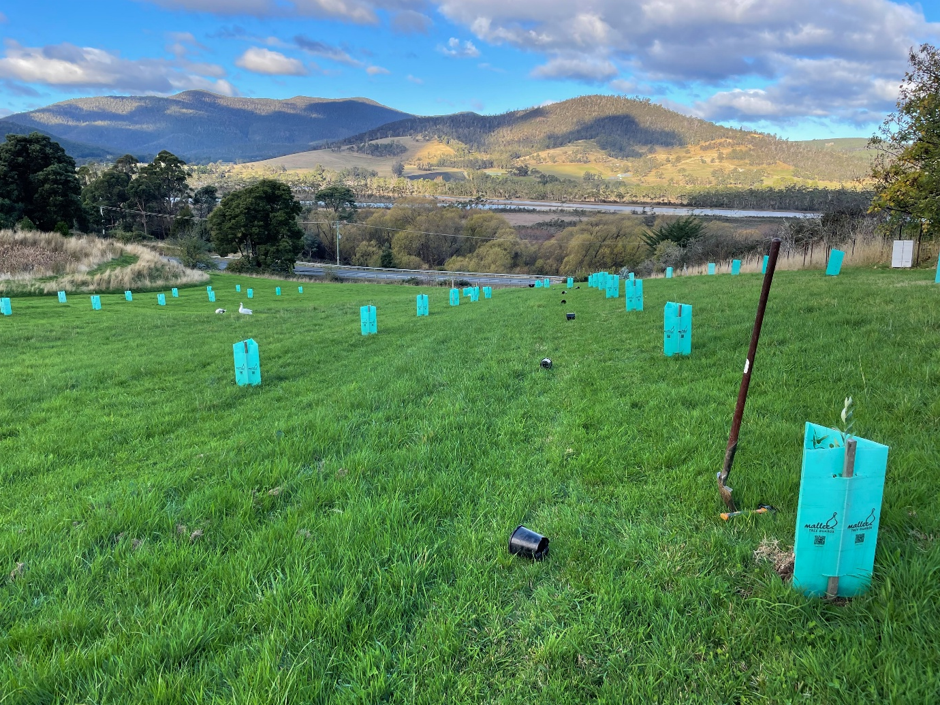
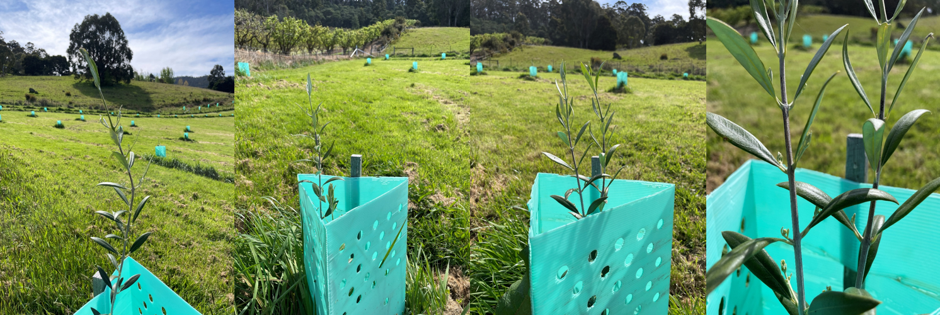
With some extra cash, I was able to source 100-Manzanillo olive trees. These were planted in late autumn (so they would get their ‘chill’ period) and with spring upon us, their growth spurt becomes evident as each day passes. Around a month ago, these Manzanillo tops were just below the green triangles, now they are powering. The soil, topography, nutrient, sun, and water over the southern side of my property is something to behold!
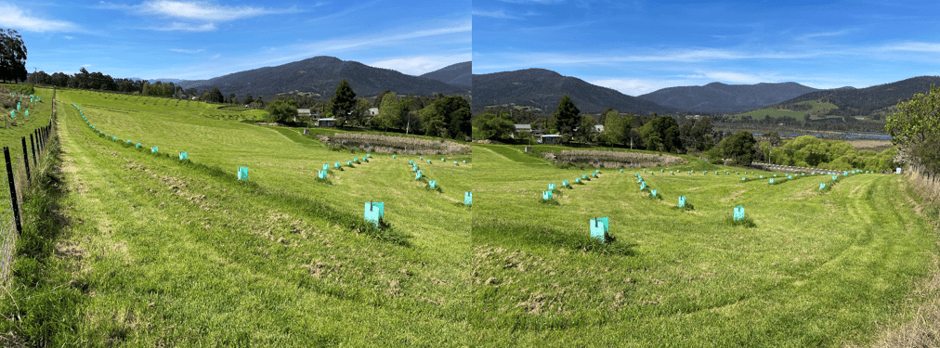
The southern paddock is starting to fill up; the inclusion of the Manzanillo olive trees hugs the topography and fence line. Once these are established over the spring/summer season, I will endeavour to plant a further 200 more downhill from these.
Buying a property, making plans for the future, and putting these in place, provides one with security, income and a feeling of purpose. I highly recommend everyone has a go!